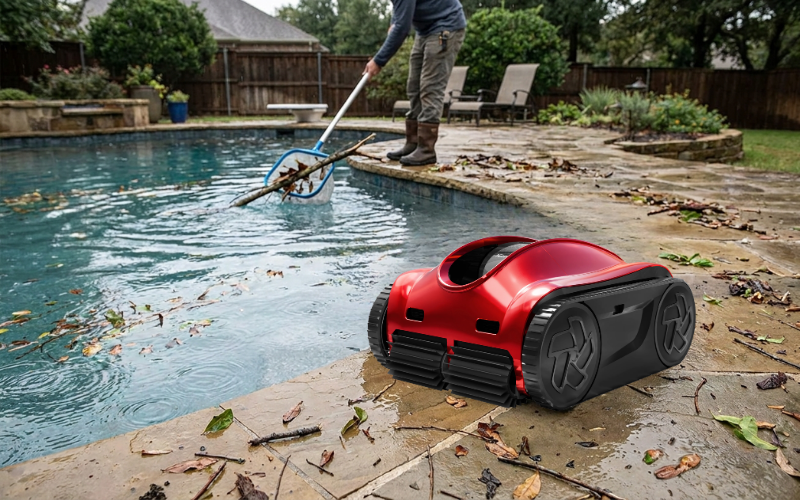
A pool can change fast after bad weather. One storm can cover the water with leaves, twigs, pollen, dirt, and small branches. Heavy wind can blow in debris even when rain is light. Backyard work can do the same thing. Fresh mulch, trimmed plants, dry soil, and grass clippings can all end up in the pool in a very short time.
When that happens, many pool owners want one simple solution. They pull out the robotic cleaner and hope it can take care of everything at once. A robotic cleaner can help a lot after storms and sudden debris events. But it works best when it is used the right way. If owners skip a few basic steps, the cleaner may become overloaded, the filter may fill too quickly, and the results may feel disappointing.
The goal after storms is not just to clean the pool. The goal is to restore order in the right sequence. That helps protect the cleaner and gives better results with less frustration.
Start by Looking at the Type of Debris in the Pool
Not all post-storm messes are the same. Some pools collect only dust, pollen, and light leaves. Others end up with sticks, seed pods, roof grit, bark, and heavy organic material across the floor and skimmers. Before using any cleaner, it helps to stop and assess what actually landed in the water.
Separate Heavy Debris From Fine Debris
Large debris should be treated differently from fine debris. A robotic cleaner is usually best at routine collection, settled dirt, and normal debris loads. It is not always the best first tool for a pool full of large branches or wet leaf piles.
Look for:
- heavy leaf clusters
- long twigs
- palm debris
- bark or mulch
- roof granules
- fine dust or pollen
- mud-like residue on the floor
Once you know what is there, the cleanup becomes much easier to plan.
Check Whether the Water Is Still Safe for Cleaning
If the storm caused flooding, runoff, or major water discoloration, pause before using the cleaner. Pools affected by runoff may contain extra soil, chemicals, or organic contamination. In those cases, water testing and circulation checks should happen early in the process.
Remove the Largest Debris First
This is one of the most important steps, and it is also one of the most skipped. Many owners want the cleaner to handle the biggest mess. That sounds efficient, but it usually creates more work later.
Use Manual Tools for Oversized Material
Start with a leaf net, skimmer, or other basic tool to remove large debris from the surface and floor. This includes big leaves, sticks, seed clusters, and anything that could clog or burden the cleaner too quickly.
A robotic cleaner performs better after the pool is past the roughest stage of the mess. Removing oversized material first helps the machine focus on what it does best.
Do Not Rush This Part
A few extra minutes of manual cleanup can save much more time later. It also lowers the chance of stopping the cleaning cycle early because the filter is already full.
Check Water Level and Circulation Before Running the Cleaner
Storms and wind can affect more than just debris load. Water level may rise or fall. Skimmer baskets may be packed. The pool pump may also need attention before the cleaner is used.
Make Sure the Pool Is in Normal Operating Condition
Check:
- water level
- skimmer baskets
- pump basket
- visible circulation flow
- obvious equipment issues
A robotic cleaner does not replace the need for basic pool function. If the pool system is not circulating well, post-storm cleanup becomes slower and less effective.
Look for Surface Residue or Mud
Sometimes the issue is not just leaves. Fine dirt may settle over the floor and steps. Mud-like residue may appear near entry points, shallow areas, or corners. This matters because it changes how the cleaner should be used. Fine dirt often needs repeated cleaning cycles and filter checks.
Brush Trouble Spots Before the First Cleaning Cycle
This step is especially useful after wind events, pollen buildup, or dirty rain. Brushing loosens material that has settled onto the walls, steps, and floor.
Brushing Helps the Cleaner Work More Efficiently
A robotic cleaner removes loose and settled debris well. It is less effective when dirt is stuck in place or lightly pasted to the surface by storm moisture. A quick brush helps move that material into a form the cleaner can actually collect.
Focus on:
- corners
- steps
- waterline edges
- shallow entry areas
- spots below overhanging trees
- places where wind tends to push debris
Do Not Expect One Perfect Pass
After storms, the first cycle often handles the obvious mess. Later cycles improve the finish. This is normal. The pool does not need to return to perfect condition after one run.
Use the Cleaner for the Right Stage of Recovery
Once the heavy debris is removed, the pool is inspected, and the main trouble spots are brushed, the robotic cleaner becomes much more valuable. This is the point where it can help reduce labor and collect the smaller debris left behind.
Let It Handle the Settled Debris Load
After storms, a cleaner is usually most useful for:
- fine leaves
- small organic debris
- pollen
- dust
- dirt on the floor
- light wall residue
That is where a cordless pool cleaning robot can fit naturally into the cleanup process. It helps restore regular cleanliness after the larger and heavier debris has already been taken out by hand.
Match Expectations to the Mess
If the pool went through a severe storm, one cycle may not be enough. That does not mean the cleaner is underperforming. It means the debris load is higher than normal. After unusual weather, repeated passes are often the right approach.
Clean the Filter More Often Than Usual
Post-storm cleaning is different from daily maintenance. The cleaner may collect much more debris than it does during normal weekly use. That means filter care becomes much more important.
Check the Filter After Each Cycle
Do not assume the cleaner can run several cycles without inspection. After storms, filters can fill fast. A full filter reduces water flow and lowers cleaning quality.
After each cycle:
- remove the filter
- empty out debris
- rinse it thoroughly
- check for fine dirt packed into corners
- reinstall it only when clean
Fine Debris Can Be Just as Problematic as Leaves
Leaves are easy to notice, but fine dirt can be even more frustrating. Dust, pollen, and small particles may clog the filter faster than expected. If the pool looks better but still feels dull, the filter may be reaching its limit too quickly between runs.
Watch for Problems the Cleaner Cannot Fix
A robotic cleaner is helpful after weather events, but it is not the answer to every post-storm issue.
It Cannot Solve Water Chemistry Problems
Heavy rain can dilute sanitizer levels and affect water balance. If the water turns cloudy or starts to look off-color, chemistry testing may be needed. The cleaner can remove debris, but it cannot correct pH or sanitizer levels.
It Cannot Replace Full Post-Storm Inspection
If the storm caused flooding, visible equipment strain, or major runoff into the pool, a more complete inspection may be necessary. The cleaner should be part of the cleanup plan, not the entire plan.
Build a Better Routine for the Next Storm
Weather mess is easier to handle when owners have a clear process. The worst cleanup situations often happen when people react too quickly and throw the cleaner into a pool that is still full of oversized debris.
A Better Post-Storm Order Looks Like This
- inspect the pool
- remove large debris manually
- check baskets and circulation
- brush problem areas
- run the robotic cleaner
- clean the filter
- repeat if needed
This routine protects the cleaner and improves results.
Final Thoughts
A robotic pool cleaner can be one of the most useful tools after storms, heavy wind, or sudden backyard debris. But it works best when it is used at the right stage. First remove the large mess. Then make sure the pool is ready for normal cleanup. After that, let the cleaner handle the settled debris and finer material that remain.
That approach is more realistic and more effective. It also helps protect the cleaner from overload. Post-storm pool care is rarely about one perfect pass. It is about restoring the pool in smart steps. When owners do that, cleanup becomes easier, faster, and far less stressful.