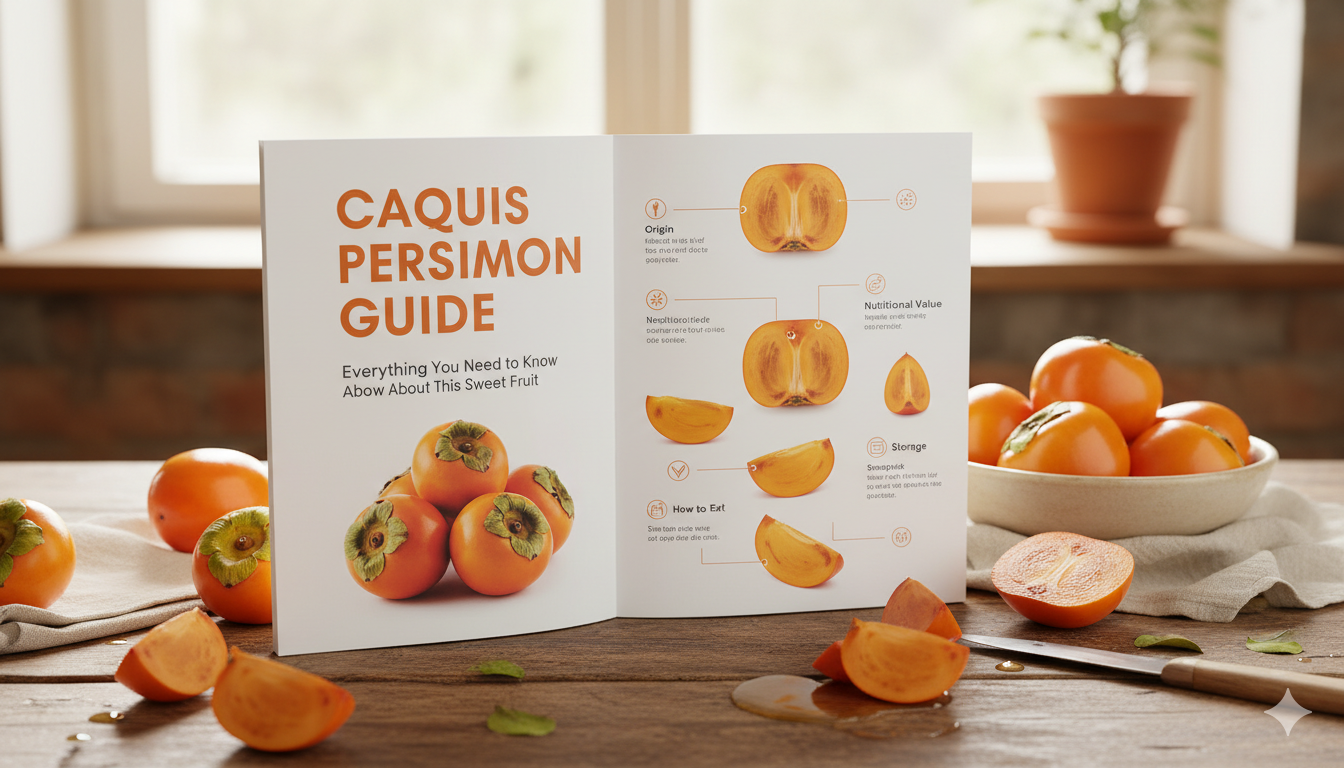
If you walk into a grocery store during the fall, you might see a bright orange fruit that looks like a tomato. These are caquis persimon. Unlike the older types of persimmons that were squishy and sour if eaten too soon, the caquis persimon is famous for being firm and sweet. Think of it like a crunchy apple but with a flavor that reminds you of honey and vanilla. This fruit is a special variety of the Diospyros kaki. Most of the ones we eat today come from a beautiful region in Spain called Ribera del Xúquer. Farmers there have perfected the way they grow them so that every bite is delicious and never leaves a dry feeling in your mouth.
Why Everyone Loves the Caquis Persimon Taste
The main reason people keep buying caquis persimon is the incredible flavor profile. Imagine biting into a firm peach that has been dipped in sugar and a hint of cinnamon. Because they aren’t “astringent” (that’s a big word for a dry, fuzzy mouth feeling), you can eat them while they are hard. I remember the first time I tried one; I was surprised that I didn’t have to wait for it to get mushy. It’s a very clean, refreshing sweetness that kids absolutely love. It makes for a perfect snack because it isn’t messy like an orange or a dripping pear. You can just wash it, slice it, and enjoy the natural candy of the earth.
The Secret Nutritional Benefits of This Fruit
Eating caquis persimon isn’t just a treat for your taste buds; it is great for your body too. These fruits are packed with fiber, which helps your tummy feel full and keeps your digestion moving smoothly. They also have a lot of Vitamin A, which is like a superpower for your eyes. If you want to stay healthy during the cold winter months, the Vitamin C in a caquis persimon helps boost your immune system. I always tell my friends that it’s like a natural multivitamin wrapped in an orange skin. Plus, they contain antioxidants that help protect your cells from damage, making them a true “superfruit” for people of all ages.
How to Choose the Best Caquis Persimon at the Store
When you are shopping for caquis persimon, you want to look for a few specific things. First, check the color. You want a deep, solid orange with no green spots. The skin should be smooth and shiny, almost like it was polished. It is perfectly fine if the fruit feels very firm; that is actually how they are supposed to be eaten! If you see a small brown speck on the skin, don’t worry. These are often just “sugar freckles” that show the fruit is very sweet. Avoid any that have deep bruises or skin that looks wrinkled, as those might be getting too old. A good caquis persimon should feel heavy for its size.
Easy Ways to Eat Your Caquis Persimon
One of the best things about the caquis persimon is how easy it is to prepare. You don’t even have to peel the skin if you don’t want to! You can eat it just like an apple. Just wash it well and take a big bite. Many people like to slice them into rounds to show off the pretty star shape in the middle. You can also dice a caquis persimon and put it on top of your morning oatmeal or yogurt. It adds a nice crunch and a lot of sweetness without needing extra sugar. I personally love tossing slices into a fresh green salad with some walnuts and feta cheese for a fancy lunch.
Storing Your Fruit to Keep It Fresh
If you buy a bag of caquis persimon and can’t eat them all at once, you need to store them correctly. If they are already ripe and firm, you can keep them on your kitchen counter for a few days. Just keep them out of direct sunlight so they don’t get too warm. If you want them to last longer, put the caquis persimon in the crisper drawer of your refrigerator. They can stay fresh in the fridge for up to two weeks! If you find that one is getting a little soft, don’t throw it away. Soft ones are great for blending into smoothies or baking into muffins. They are very versatile fruits.
The Difference Between Persimon and Traditional Persimmons
It can be confusing because there are different types of this fruit. The caquis persimon is a specific “registered” brand of the Rojo Brillante variety. Old-fashioned persimmons, like the Hachiya, have to be very soft like jelly before you eat them, or they taste terrible. However, the caquis persimon goes through a natural process after harvest to remove the bitterness while keeping the fruit firm. This means you get the best of both worlds: a sweet taste and a crunchy texture. It is the modern way to enjoy an ancient fruit. Once you try the firm version, it is hard to go back to the squishy ones!
Fun Ways to Use Caquis Persimon in Cooking
You might think this fruit is only for raw snacking, but caquis persimon is amazing when cooked. You can slice them and grill them for a few minutes to serve with chicken or pork. The heat brings out even more of the honey flavor. You can also chop them up to make a fresh salsa with lime juice and cilantro. Because the caquis persimon holds its shape so well, it doesn’t turn into mush in the oven. Try putting thin slices on top of a tart or baking them into a loaf of sweet bread. The possibilities are endless when you have such a sturdy and tasty ingredient in your kitchen.
Why This Fruit is Great for Kids
Getting kids to eat healthy can be tough, but caquis persimon usually wins them over. Since it has no seeds and no core, it is very easy for children to handle. The bright orange color makes it look fun and exciting on a plate. Parents love caquis persimon because it provides a steady energy boost without the “sugar crash” that comes from candy or soda. It is also a great way to introduce kids to different cultures, as they can learn about where the fruit grows in Spain. It is a “finger food” that is actually good for them, making it a win-win for everyone at the table.
The Growing Season: When to Buy
You can’t find caquis persimon all year round, which makes them special. Their season usually starts in late October and lasts until January. This makes them a perfect holiday fruit! I love using them as decorations in a fruit bowl during Thanksgiving or Christmas before eventually eating them. Because the caquis persimon is a winter fruit, it arrives just when other summer fruits like berries and peaches are disappearing. It’s like a little gift from nature to keep us happy during the colder months. Always keep an eye out for them starting in the fall so you don’t miss the window of opportunity.
Quick Facts Table: Caquis Persimon at a Glance
| Feature | Detail |
| Texture | Firm, crunchy, and smooth |
| Flavor | Sweet, honey-like, mild vanilla |
| Best Season | October through January |
| Main Nutrients | Vitamin A, Vitamin C, Fiber, Manganese |
| Origin | Mainly Ribera del Xúquer, Spain |
| Edible Skin? | Yes, the skin is thin and safe to eat |
| Seedless? | Usually seedless, making it easy to slice |
Frequently Asked Questions (FAQs)
1. Do I need to peel a caquis persimon?
No, you do not! The skin is very thin and perfectly edible. Just make sure to wash the fruit under cold water first.
2. Can I eat the “leaf” on top?
The green leaves (calyx) on top are not usually eaten. You can simply pull them off or cut the top of the fruit off before slicing.
3. Is caquis persimon good for weight loss?
Yes! They are high in fiber, which helps you feel full longer. They are a great low-calorie snack to satisfy a sweet tooth.
4. Why is it sometimes spelled “Persimon” with one ‘m’?
“Persimon” (with one ‘m’) is a trademarked name for the Rojo Brillante variety grown in a specific part of Spain.
5. How do I know if it has gone bad?
If the fruit has very soft, mushy spots, mold, or a sour smell, it is time to toss it. Dark brown skin that is very shriveled is also a bad sign.
6. Can I freeze caquis persimon?
Yes! You can slice them and freeze them for smoothies, or puree them and freeze the pulp for use in baking later on.
Conclusion
The caquis persimon is truly a hidden gem of the fruit world. It is sweet, crunchy, and loaded with vitamins that keep your body strong. Whether you are eating it fresh on the go, adding it to a fancy salad, or sharing it with your kids, it is a fruit that never disappoints. Its unique ability to stay firm while being perfectly sweet makes it a favorite for many families every autumn. Next time you see these bright orange beauties at the market, grab a few and experience the crunch for yourself!
